
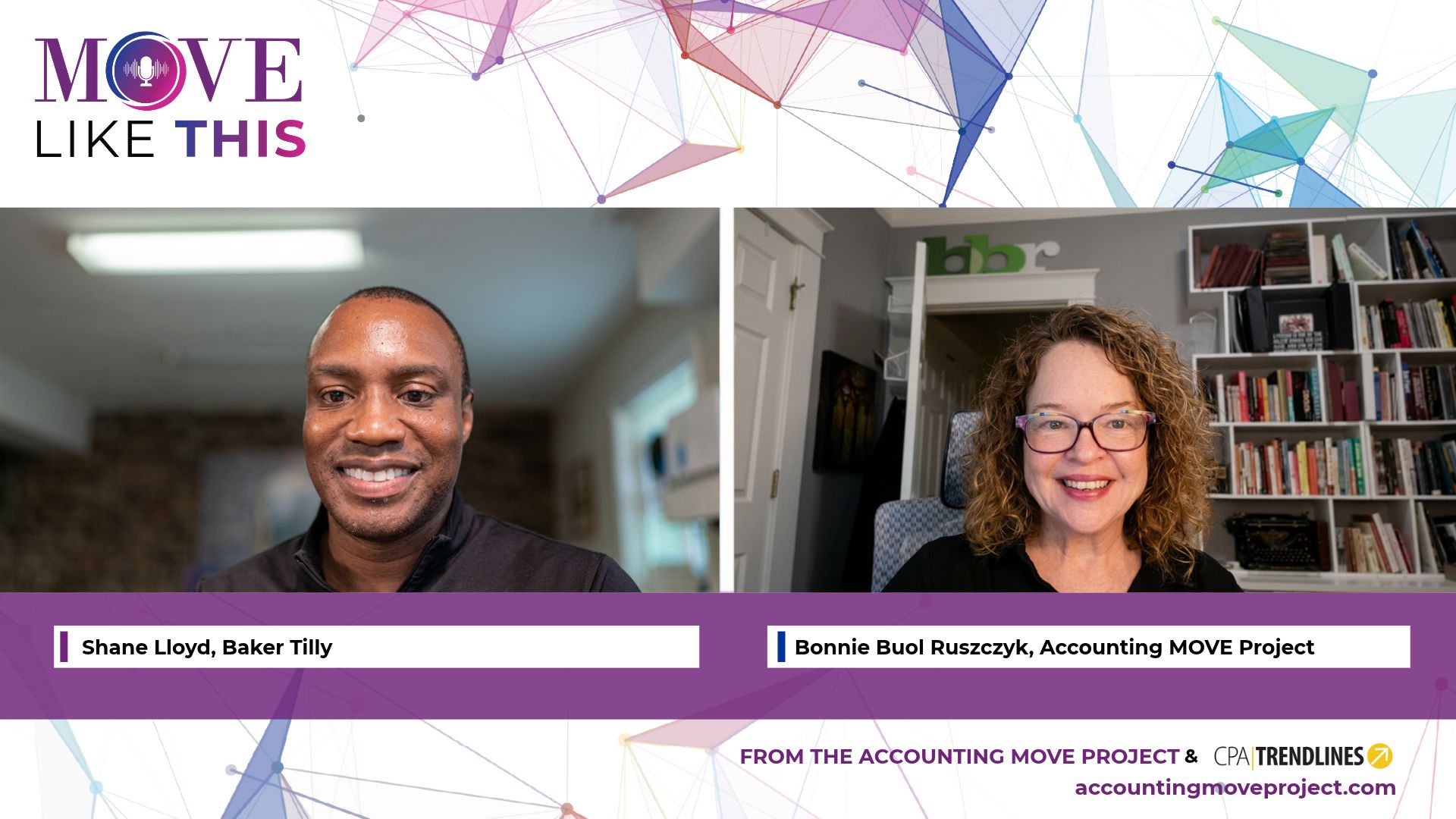
 In this episode of MOVE Like This, host Bonnie Buol Ruszczyk talks with Shane Lloyd, chief inclusion officer at Baker Tilly, about why inclusion belongs in the plumbing of a business, not on a separate list of extracurriculars. Lloyd, who holds a master’s in public health and spent years in behavioral neuroscience before this role, argues that real change comes from redesigning the systems people work inside, not just coaching individuals to adapt to systems that were never built with them in mind.
Caregiving is his clearest example. Lloyd calls caregivers one of the largest but least examined populations inside most organizations, people firms expect to identify themselves, name their own needs, and go find the right benefit on their own. He points to the curb cut, a fix designed for wheelchair access that ends up helping parents with strollers and travelers with luggage too. Workplace policies can work the same way, and Lloyd pushes firms to remember that who counts as underrepresented shifts as conditions shift. “Underrepresented status is not innate to an identity group,” he says. “It is the byproduct of conditions.”
That framing leads to a harder question about merit. If talented people get pushed out by caregiving demands or workplace structures that have nothing to do with their ability, advancement was never purely about skill in the first place. “Did you really make it to principal because of your merit,” Lloyd asks, “or did you make it to principal because you survived?” His advice to leaders who want to do better is to start somewhere, whether that’s an employee resource group or mentoring one person, and keep building from there. “Where you start,” he says, “is not the stopping place.”
Key Takeaways:
- Inclusion Belongs in How a Business Runs, Not on the Side: Real inclusion work shows up in compensation, advancement, and leadership decisions, not just recruiting events and employee resource groups.
- Caregivers Are a Large, Underexamined Population: Most firms have never measured how many of their people are caregivers, even though the group may be larger than many demographics firms already track.
- Design the System, Don’t Just Rely on Disclosure: Policies built with caregivers and people with disabilities in mind from the start tend to help everyone, the same way a curb cut built for wheelchairs also helps parents with strollers.
- Underrepresentation Is a Condition, Not an Identity: Who is underrepresented shifts as circumstances change, which means inclusion work has to keep evolving instead of locking onto one fixed group.
- Removing Barriers Makes Competition Honest: When people are pushed out of the running for reasons that have nothing to do with their skill, nobody, including the people who stayed, can be sure advancement reflected merit at all.
We are pleased to partner with CPA Trendlines for podcast distribution now too. Anyone can listen to the episode, but you need to be a subscriber to watch the video version. Check it out here!