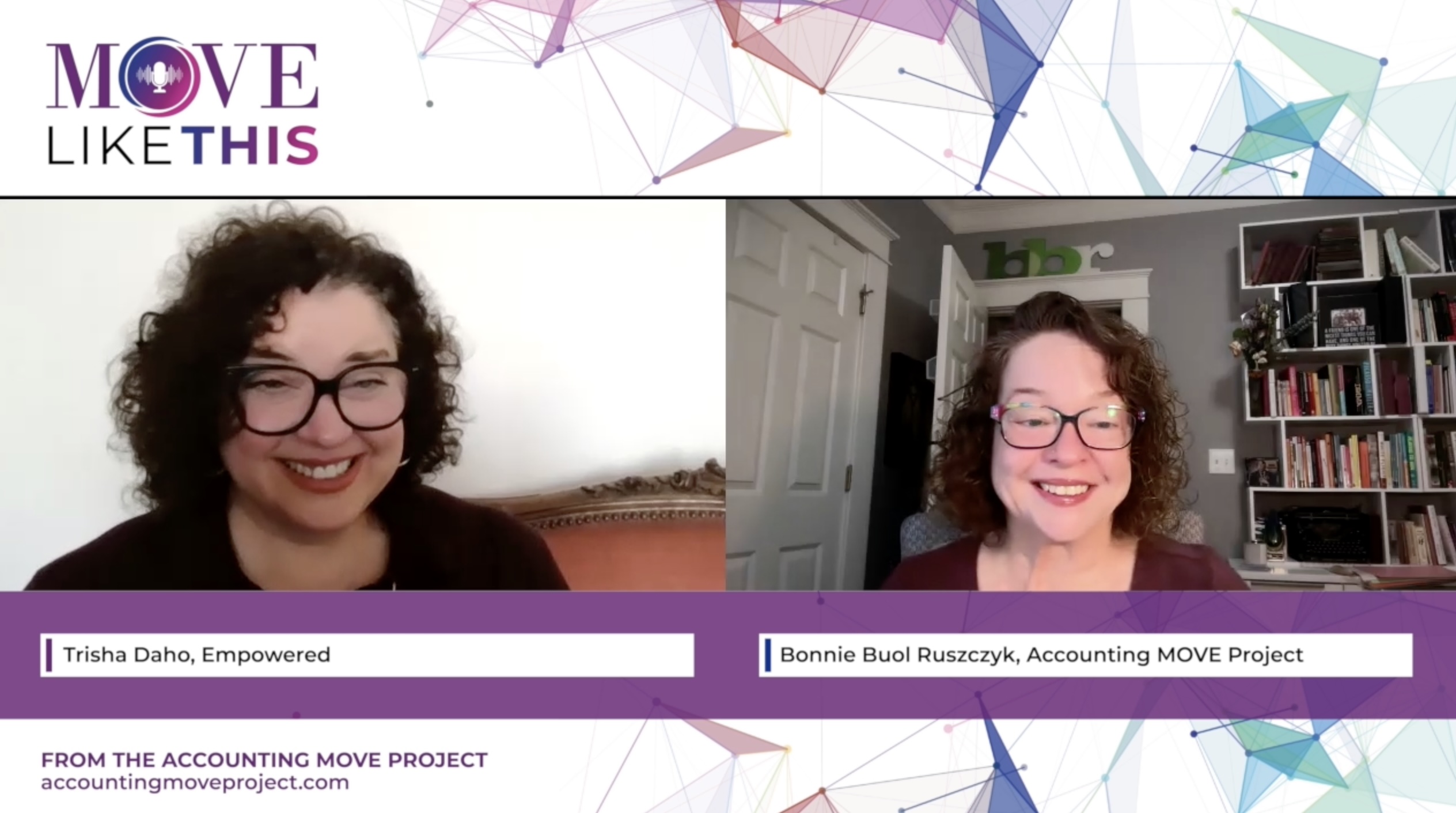
In this episode of MOVE Like This, Trisha Daho with Empowered joins Bonnie to unpack what’s really happening inside accounting firms when it comes to talent, leadership, and growth. Drawing on her experience as a former Big Four partner and fractional Chief People Officer, Trisha makes a clear point: firms that are succeeding aren’t just focused on growth, they’re intentional about how they grow. That starts with a defined talent strategy. Firms that invest in development, align values with their people, and create consistent leadership experiences see stronger retention and performance, while those that treat talent as secondary continue to struggle.
A major theme throughout the conversation is the persistent gap in advancing women in the profession. While women make up more than half of new entrants, many firms still see a significant drop-off at the manager and senior manager levels. Trisha challenges the idea that this is primarily about personal choice, pointing instead to structural issues, particularly a lack of intentional leadership development, sponsorship, and accountability. Flexibility alone isn’t enough. Without clear pathways and support, firms may be unintentionally losing high-performing talent.
The discussion also highlights what separates a “nice” culture from a true growth culture, along with the broader shifts shaping the profession. Growth cultures are built on the belief that people can expand beyond their current roles, and leaders actively invest in helping them do so. At the same time, Gen Z is raising expectations around leadership, pushing firms to prioritize connection, clarity, and emotional intelligence. Looking ahead, AI adds another layer of complexity. While many firms are focused on efficiency, the real challenge will be understanding how technology reshapes roles, development, and leadership. Firms that think beyond cost savings will be better positioned for what comes next.
Key Takeaways:
- Growth Starts with Intentional Talent Strategy: Firms that are deliberate about development, values, and leadership experience outperform those that treat talent as secondary.
- The Mid-Career Drop-Off Is Systemic, Not Inevitable: Retention challenges for women are driven more by structure and leadership gaps than personal choice alone.
- Growth Cultures Unlock Untapped Potential: Expanding how firms view and develop people leads to better performance, innovation, and revenue opportunities.
- Gen Z Is Raising the Bar for Leadership: Their expectations around connection, feedback, and boundaries are forcing firms to evolve for the better.
- Flexibility Alone Isn’t a Solution: Without real development pathways and support, flexibility does little to solve deeper retention issues.
- AI Will Reshape More Than Efficiency: Firms must consider how technology impacts people, culture, and leadership, not just costs.