
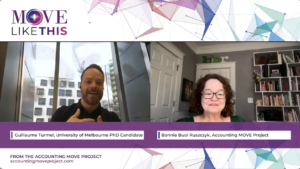
 In this episode of the MOVE Like This podcast, Guillaume Turmel, a PhD candidate at the University of Melbourne, joins Bonnie to explore why so many employees still feel “slightly off” even inside organizations with strong DEI programs. Drawing from his own international work experience and research on inclusion, Guillaume challenges a common assumption: that firms know what inclusion looks like for their people.
The conversation centers on a compelling analogy comparing inclusion to love languages. Organizations tend to focus on what they do to create inclusion, such as policies, programs, and leadership behaviors, without fully understanding how those efforts are actually experienced. Guillaume’s early research reveals a telling gap: when asked abstractly about inclusion, people describe authenticity and bringing their whole selves to work. But in practice, what shapes belonging day to day is far more concrete, particularly whether they are included in decisions, consulted on projects, and acknowledged by managers and colleagues.
The discussion also highlights the outsized role managers play. Small moments, remembering personal details, communicating clearly about decisions, creating space for feedback, can either reinforce or quietly undermine a culture of inclusion. Guillaume argues that inclusion is less about eliminating friction and more about building the trust needed to reconnect after moments of disconnect. The episode is a useful reminder that inclusion is not a checklist. It is an ongoing human experience shaped by communication, expectations, and everyday interactions.
Key Takeaways:
- Inclusion Is Experienced Differently by Everyone: Employees do not all feel valued or included in the same ways, making curiosity and communication essential.
- Everyday Interactions Matter More Than Formal Programs: Small moments with managers and coworkers often shape inclusion more than company-wide initiatives or policies.
- Managers Play a Critical Role in Belonging: Employees often judge whether organizational values are genuine based on the actions and communication of direct managers.
- Expectations Strongly Influence Inclusion: Feelings of belonging often rise or fall based on whether workplace experiences align with what employees expect will happen.
- Repairing Disconnects Builds Stronger Relationships: Inclusion is strengthened when teams address misunderstandings openly instead of allowing frustration or assumptions to grow.
- Curiosity Creates Better Workplace Communication: Asking questions, listening carefully, and assuming good intent can help organizations navigate differences more effectively.